
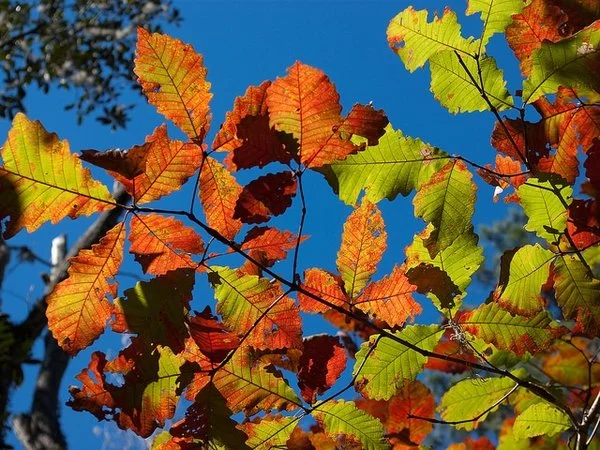
ABOUT THE TREES
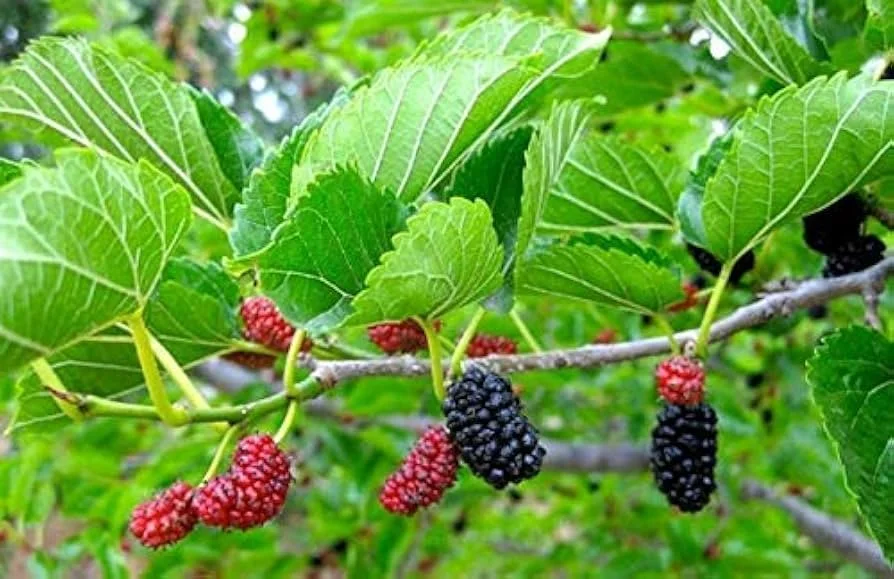
Red Mulberry
Red mulberry is the only native mulberry in NC. It grows up to 30 feet with a trunk about 2 feet in diameter and a dense, spreading crown.
The small tree produces a 1-inch long cluster of drupes that mature in summer. Fruit resembles a blackberry and, if eaten when unripe, are poisonous as is the milky white sap that all parts of the tree produces. Fruits that are eaten when ripe are harmless.
The red mulberry is best grown in rich, moist, well-drained soils in full sun to part shade. It will be at its best in full sun. Prune in late fall or winter to avoid bleeding. It does not do well in poor soil.
The fruits are relished by birds but dropped fruit can cause maintenance issues such as staining concrete walkways, patios, and cars, so be aware of where the canopy will extend when choosing the location.
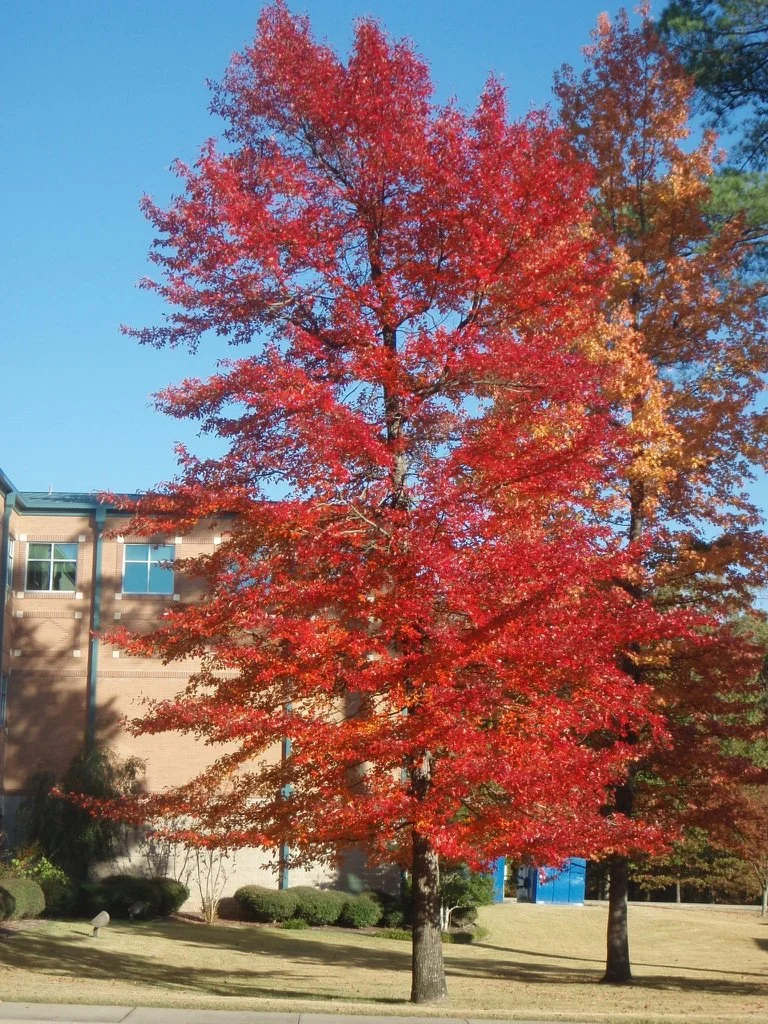
Black Gum
Black gum or black tupelo has an upright growth that makes it ideal for many landscapes. It’s a slow-growing tree, reaching a mature size of 40 to 70 feet tall, but typically 30 feet in cultivation.
It is tolerant of drought, heat, dry, and wet soils, and is moderately salt tolerant. It withstands wind, ice, and salt spray in coastal locations.
The black gum is grown as an ornamental for its beautiful fall color and for its shiny, dark green leaves in summer. It’s also an excellent choice to support wildlife. The nectar from its flowers is prime feeding for bees and tupelo honey is highly prized.
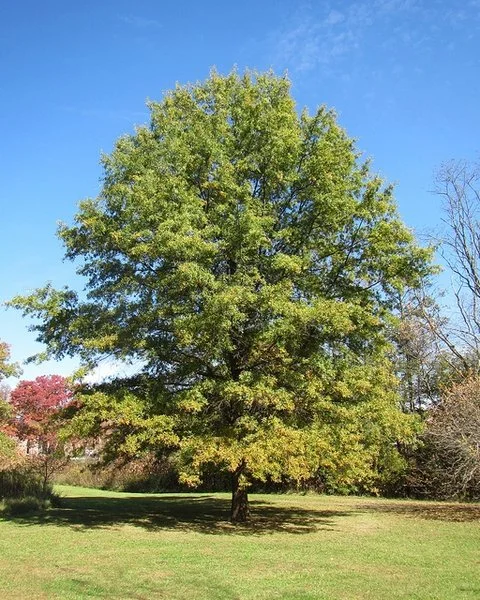
Willow Oak
Willow oak is a medium to large, fast-growing tree. It may grow 40 to 75 feet tall and 25 to 50 feet wide and has an oval to rounded crown. It can reach up to 100 feet tall and is long-lived. It has a nice balanced, rounded form and fine texture that has made it a popular shade tree for the landscape. Willow oak starts producing acorns at the age of 15 to 20 years.
This tree is a high-value wildlife tree for birds and mammals. It is a host plant for the larvae of the imperial moth, as well as numerous butterflies.
It may be utilized as a shade tree in commercial establishments, parks, golf courses, large yards, and as a street tree. It also does well along ponds or water gardens.
Swamp Chestnut Oak
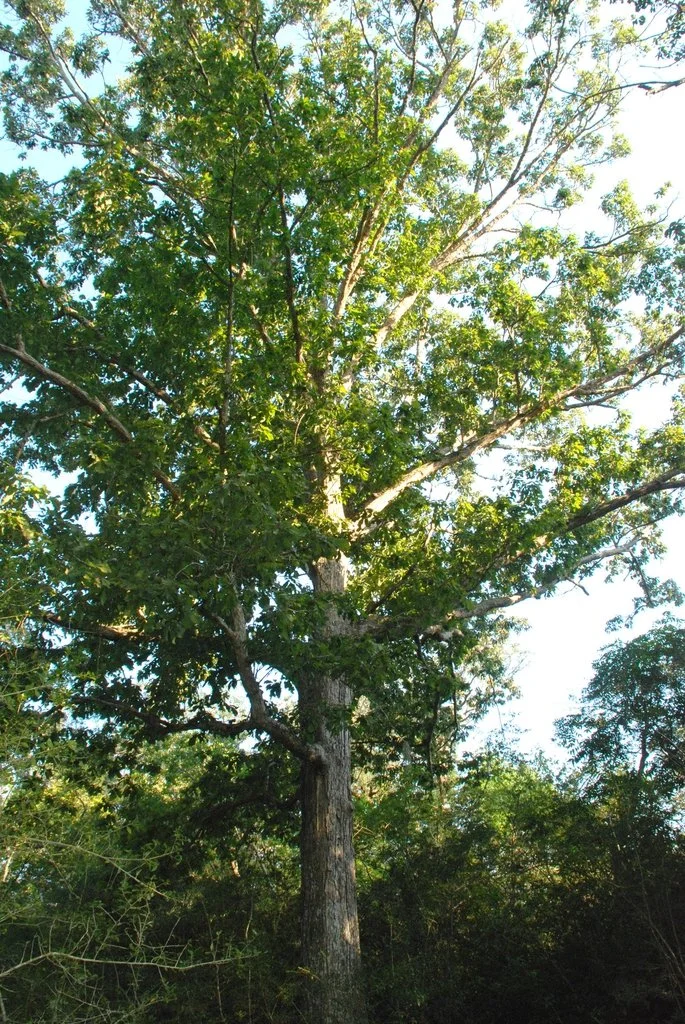
Swamp Chestnut Oak may grow 60 to 80 feet tall. The dense crown is rounded with an irregular spread. It is native to swampy areas and low woodlands of the southeastern coastal plain. Its preference is for moist, well-drained, acidic sandy to silty clay loams in full sun to part sun. It tolerates wet soils and occasional flooding.
It is also known as basket oak, for the baskets made from its wood, and cow oak because cows eat the acorns.
It is adaptable to urban conditions and makes a great shade tree for a larger yard or park. As with most native oaks, it is a high-value wildlife plant. The acorns are sweet and serve as food for wildlife.
Information from NC State Extension and the U.S. Forest Service